studies
Explore our studies
Hospitals have reported blood culture contamination (BCC) rates below 1% with consistent use of Kurin, as well as reductions in unnecessary costs associated with false positives.
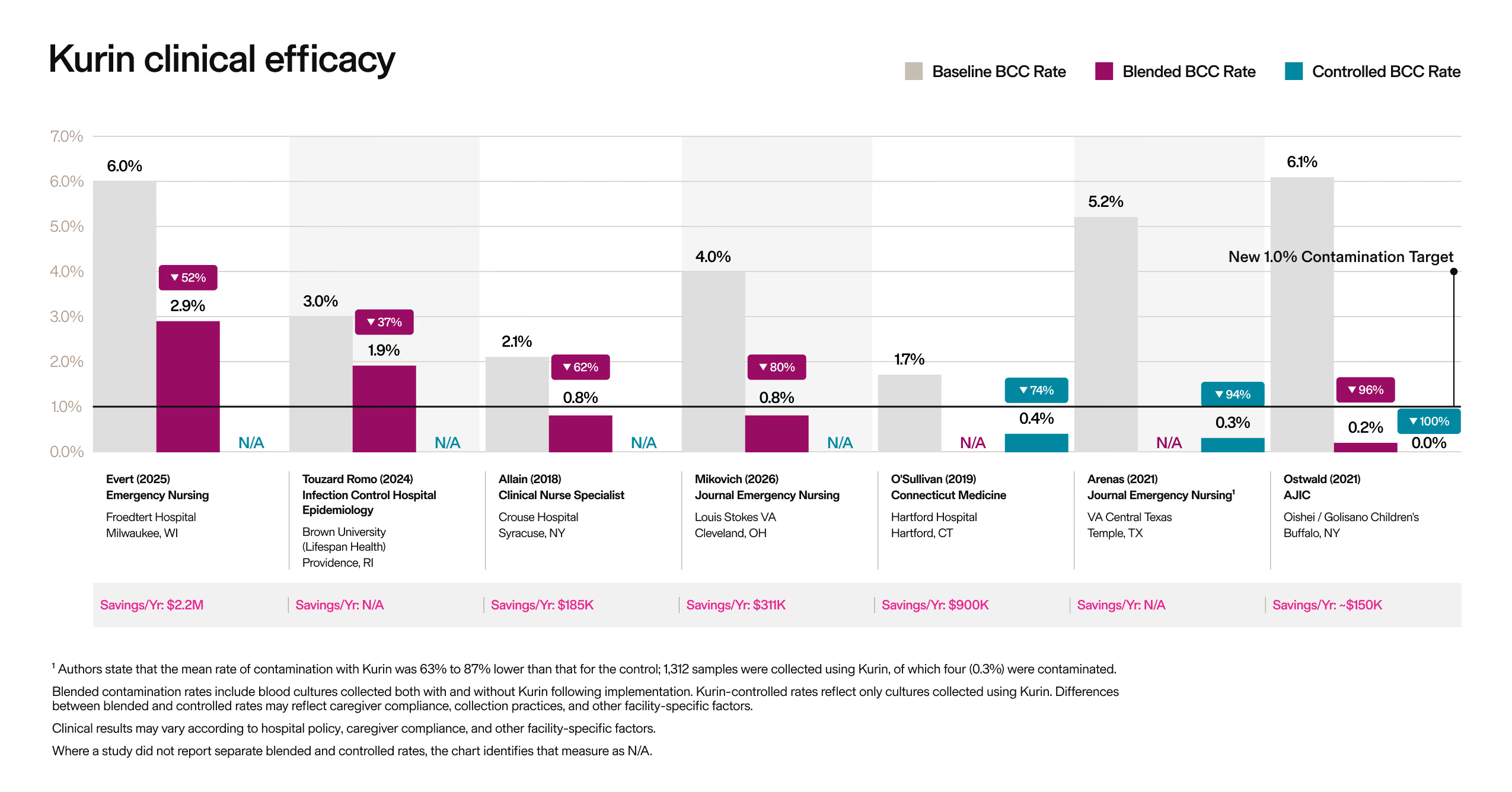
Kurin clinical efficacy

Kurin rates reflect the efficacy of Kurin when it was used.
1 Now known as Brown University Health.
2 Now known as Golisano Children's Hospital of Buffalo. BCC reduction reflects Period 2 data.
3 Authors state that the mean rate of contamination with Kurin was 63% to 87% lower than that for the control: 1,312 samples were collected using Kurin, of which four (0.3%) were contaminated.
2 Now known as Golisano Children's Hospital of Buffalo. BCC reduction reflects Period 2 data.
3 Authors state that the mean rate of contamination with Kurin was 63% to 87% lower than that for the control: 1,312 samples were collected using Kurin, of which four (0.3%) were contaminated.
Clinical results may vary according to hospital policy, caregiver compliance, and other facility-specific factors.
Filter by
Meta-analysis
Peer Reviewed Publication
Published
Oral/Poster Presentation
Case Study
Clinical Studies
Implementation of an Initial Specimen Blood Culture Diversion Device to Reduce Blood Culture Contamination: Lessons Learned
Touzard Romo F, Auld D, de Abreu A, Roberts K, Jackson G, Whitehead V, O’Rourke E, Has P, Mermel LA.
Infection Control & Hospital Epidemiology. October 2024.
October 2024
Published
Asynchronous Testing of Two Specimen-Diversion Devices to Reduce Blood Culture Contamination: A Single-Site Product Supply Quality Improvement Project
Arenas M, Boseman GM, Coppin JD, Lukey J, Jinadatha C, Navarathna DH.
Journal of Emergency Nursing. 2021;47(2):256-264.e6.
March 2021
Peer Reviewed Publication