Six Years of Sustained Blood Culture Contamination Rate Reduction Reaches Goal with Kurin
April 2026
The importance of accurate blood culture testing for Sepsis patients in the ED.
Blood culture contamination (BCC) is a persistent problem in the hospital, contributing to unnecessary antibiotic exposure, excessive diagnostic testing, treatment delays, increased length of stay, and higher costs. Rates are higher in the emergency department (ED) compared to the general wards and intensive care units.9 National benchmarks define <3% contamination as acceptable,11 yet emerging evidence supports a more ambitious goal of ≤1%,31,35 particularly in high-risk populations such as patients with sepsis for whom sustainable BCC reduction will have significant impact on clinical outcomes.
Over 850,000 patients with sepsis visit the ED annually and 80% of patients with sepsis are first seen in the ED.93 Clinical suspicion of sepsis is followed by blood cultures, but if there is a moderate-to-high risk of sepsis, antibiotics are administered within one hour.94 Despite prompt management, up to 40% of patients initially treated for sepsis in the ED are diagnosed with other similarly presenting conditions,93 resulting in over-treatment or delay of proper treatment.
For patients with suspected or confirmed sepsis, blood culture accuracy has particularly serious implications, as early identification of the causative pathogen and prompt initiation of appropriate antimicrobial therapy are critical. BCC is a significant cause of unnecessary antibiotic administration56 and subsequent AKI. Additionally, patients with BCC stay hospitalized an average of two days longer than patients with negative cultures9 during which they are exposed to hospital-acquired infections and face a higher rate of mortality.7
line
Settings
Seeking sustainable blood culture contamination (BCC) reduction, a not-for-profit community health system implemented changes in blood culture collection practice in 2019, including continuous monitoring of blood BCC rates. A study was designed to evaluate the impact of the changes, specifically for patients admitted with sepsis.
Method
Data were extracted for inpatient adult patients who had a final discharge diagnosis of sepsis, regardless of their initial admission diagnosis. Data from a total of 154 blood cultures were reviewed across three time periods spanning six years:
- 2019-2020: No blood culture diversion used
- 2021–2022: Implementation of a manual multi-step blood diversion device (Steripath®)
- 2023–present: Implementation of an automatic blood diversion device (Kurin®)
Automatic Diversion Provided Superior Sustainable BCC Reduction Compared to Manual Diversion
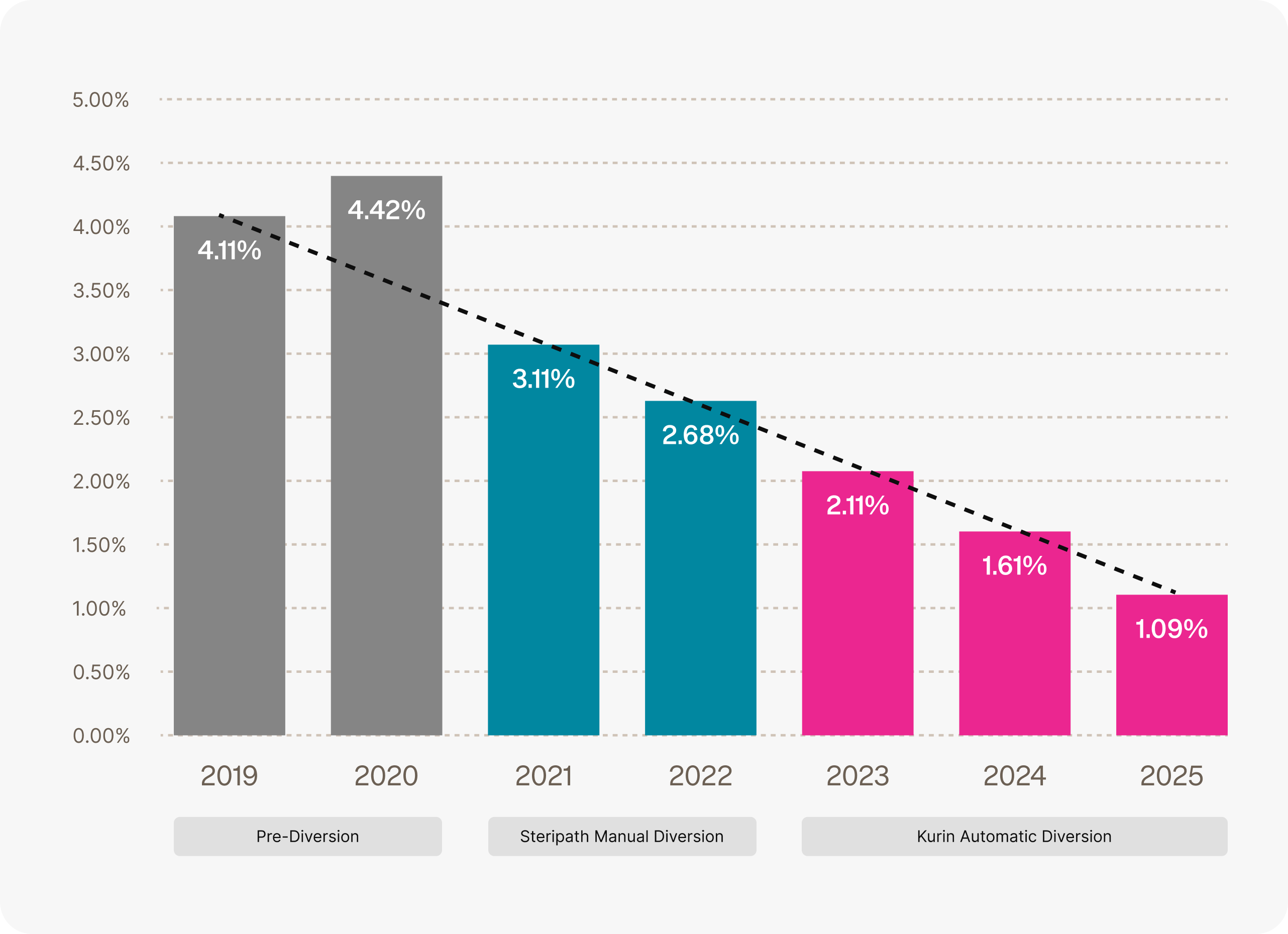
In 2019 and 2020, the facility documented BCC rates for sepsis patients at 4.11% and 4.42%, respectively. With the introduction of manual diversion (Steripath) the rate fell to 3.11% in 2021 and then to 2.68% in 2022 but did not approach the hospital goal of 1%. The author cited a lack of user compliance as the reason for persistent contamination. To address this challenge, the Steripath device was replaced with Kurin automatic blood culture diversion sets. Using Kurin, the facility achieved sustainable BCC reduction for 3 consecutive years, completing 2025 with a 1.09% contamination rate. In 2026, the rate continued to decline below 1%.
Key takeaway
Sustainable BCC reduction relies on clinician acceptance of new technology. With acceptance comes high compliance and improved clinical outcomes.
- 50.5% reduction in BCC rates in sepsis patients with Kurin.
Implementing blood culture diversion was associated with a 50% reduction in BCC, with the lowest rates following implementation of Kurin automatic diversion.
- $1.71 million cumulative cost savings.
The hospital estimated that the use of blood culture diversion yielded a $1.71 million cost savings over the study period.
- Greater ease of use cited by clinical staff with Kurin automatic diversion.
Manual diversion was used in 48% (30/62) of the blood culture collections versus while automatic diversion was used in 78%, with staff feedback indicating greater ease of use with the automatic Kurin device.